Inside the paint frame: building Prospero’s island
Nine weeks, 140 litres of paint and one enormous sky. Head of scenic art Delia Moreno on how The Tempest got its storm.

Two floors above the Stagelight stage there is a room most of our audience will never see. It is long, tall and smells permanently of size glue and coffee. Along one wall runs the paint frame: a steel gantry 18 metres wide that rises and falls through a slot in the floor, so the scenic artists can paint a backdrop without ever climbing a ladder.
For The Tempest, director Miriam Okonjo asked for a sky that could “be a storm and then forget it ever was.” That single sentence became nine weeks of work.
Starting with the weather
We began with photographs — hundreds of them, taken from the Bay Bridge at every hour of a stormy week in March. Delia’s team mixed a palette of just eleven colours from those images, then painted the cloth wet-on-wet using brooms, sponges and a garden sprayer.
“A painted sky has to work under forty different lighting states. If it only looks good in one, it isn’t finished.”
Painting for light
Lighting designer Yuki Tan visited the frame every Friday with a handheld LED panel. Some areas of the cloth were painted with translucent dyes so that light from behind would make them glow; others were deliberately opaque so they would read as cloud mass under front light. By the final week, the cloth could shift from a bruised violet storm to a pale, rinsed dawn with a single cue.
- 140 litres of scenic paint and dye
- 11 base colours, mixed in house
- 18 × 9 metre muslin cloth, seamless
- 4 artists, 9 weeks, uncountable cups of coffee
See it for yourself
Our Saturday backstage tours visit the paint frame when it isn’t in use. Tours last an hour, cost $12 and are free for members — book at the box office or online.
More from the wings

Why we still rehearse with a piano
Musical director Owen Park on the oldest instrument in the building.

Scoring a storm: the music of The Tempest
Cellist Ana Ruiz on writing for one instrument and an entire tempest.
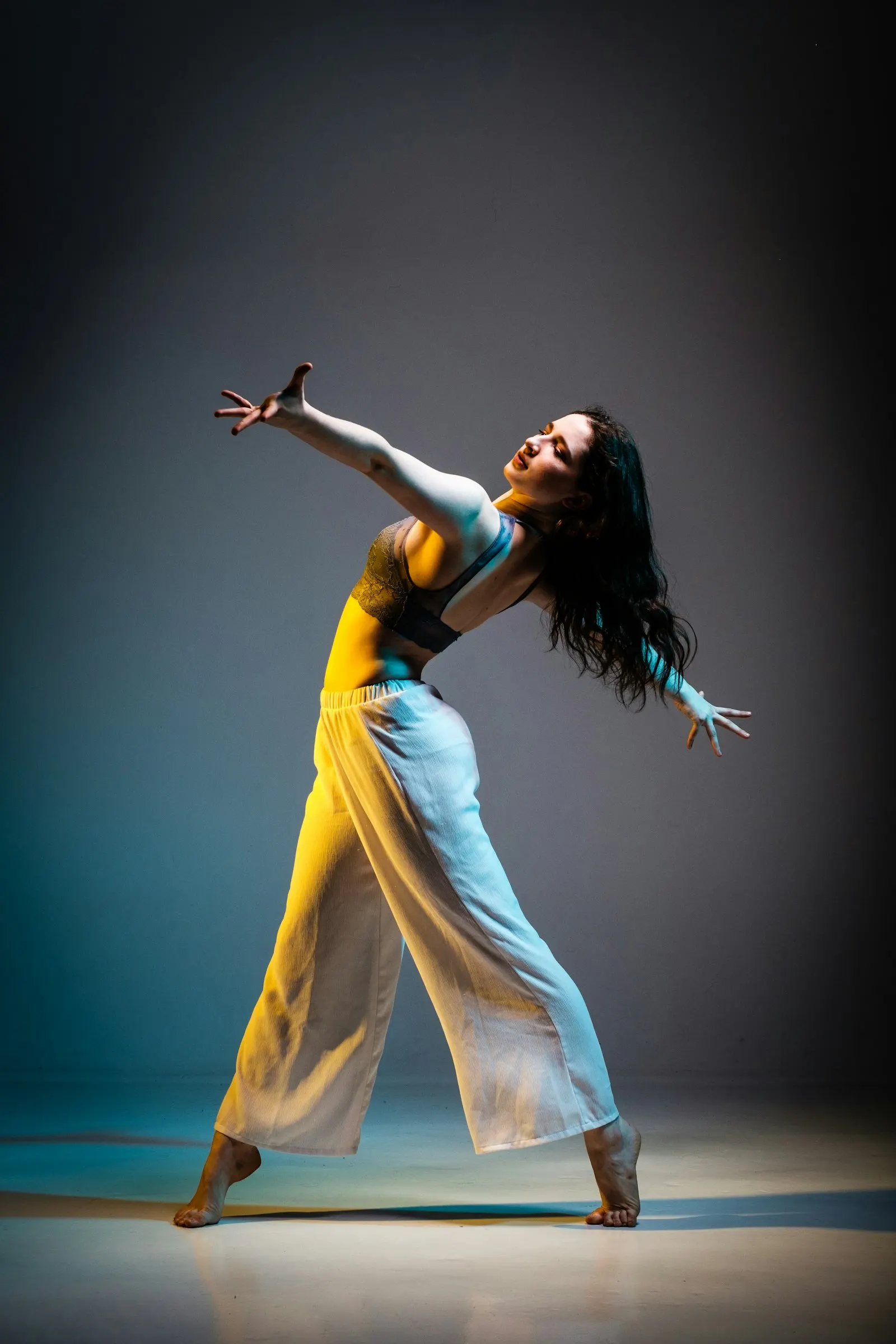
Learning to fall: dance in Hamlet in Motion
Choreographer Lin Marchetti on telling a tragedy without a word.